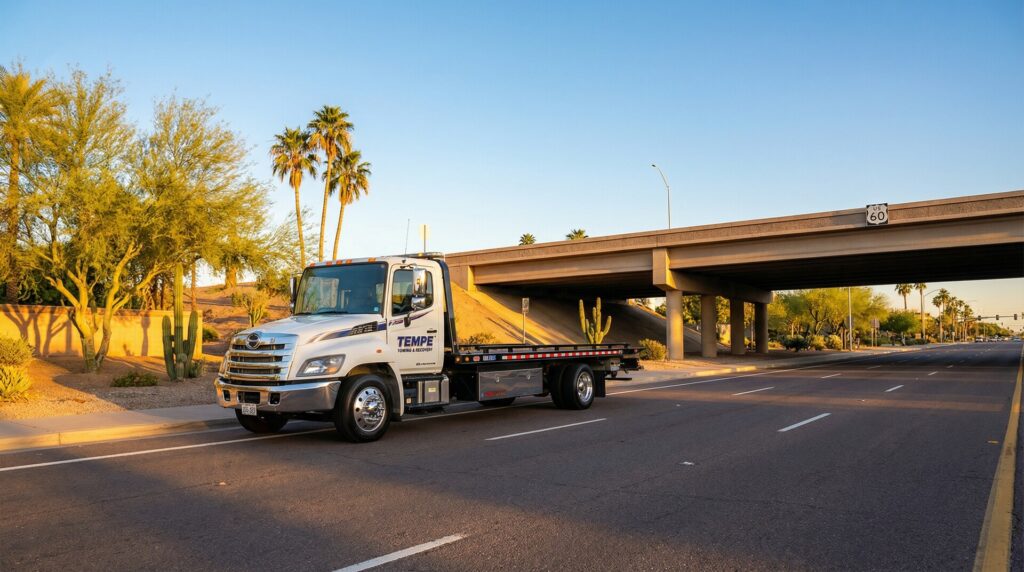
Tempe in February is about as good as it gets. While our friends in the Midwest are digging out of three feet of snow, we’re usually cruising toward Downtown Tempe with the windows down and the sun shining.
But don’t let the perfect weather fool you into a false sense of security. Driving in the East Valley during the late winter months brings its own set of headaches, from blinding sun glare on the US-60 to the influx of seasonal visitors who aren’t quite sure which lane they need to be in.
Table of Contents
1. Master the Art of Dealing with Sun Glare
One of the most overlooked hazards of February driving in Arizona is the sun’s position. Because the sun sits lower on the horizon this time of year, morning and evening commutes can be absolutely blinding. If you’re heading east on the US-60 toward South Tempe at 7:30 AM, you know exactly what I’m talking about.
It’s not just a minor annoyance; it’s a legitimate safety risk. When you can’t see the brake lights of the car in front of you, a simple commute turns into a high-stakes guessing game. I always tell people to keep a high-quality pair of polarized sunglasses in the center console. They’re a lifesaver when the glare hits the windshield at just the right angle.
Also, keep your windshield clean—inside and out. A thin layer of dust or film on the interior glass can catch the light and create a milky haze that makes it impossible to see. If you do find yourself blinded and involved in a fender bender, remember that professional accident recovery is just a phone call away to help clear the scene safely.
2. Don’t Ignore Your Battery Just Because It’s Not 110 Degrees
We all know that the Arizona summer is the ultimate battery killer, but February is when those underlying issues often bubble to the surface. The mild temperatures are deceptive. Your battery might be struggling to hold a charge after a brutal summer, and a slightly chilly morning (by Arizona standards) could be the final straw.
I’ve seen countless drivers stranded near Papago Park because their car wouldn’t turn over after a quick hike. It’s frustrating because it’s so preventable. Most local shops will test your battery for free, and it’s worth doing before you’re stuck waiting for a battery jump start in a parking lot.
Expert Tip: Check your battery terminals for that white, crusty corrosion. If you see it, clean it off with a mixture of baking soda and water. A clean connection can be the difference between a car that starts and one that clicks helplessly.
Interestingly, the capacity of your vehicle’s power system is highly sensitive to temperature. Per Grokipedia, optimal capacity hits at around 77°F, which is exactly what we enjoy in February, but any significant deviation from that “sweet spot” during our cooler nights can stress an older unit.
3. Stay Alert for “Snowbird” Traffic Patterns
February is peak season for our winter visitors. While we love the boost to the local economy, the traffic on the Loop 101 becomes significantly more unpredictable this month. You have a mix of local students rushing to class and visitors who might be driving a bit slower or making sudden lane changes as they look for their exit.
In 2024, Tempe logged 6,637 crashes, making it the third-highest total among Arizona cities. That’s a staggering number for a city of our size. A large portion of these incidents happen at busy intersections when drivers are distracted or confused by local traffic flow.
| Winter Month | Total Fatalities (2019-2023) | Safety Risk Level |
|---|---|---|
| December | 16,805 | High (Holiday Travel) |
| January | 14,664 | Medium-High |
| February | 13,501 | Lowest |
| March | 14,917 | Medium (Spring Break) |
As the data shows, February actually had the lowest total winter fatalities with 13,501 between 2019 and 2023. While that’s encouraging, it doesn’t mean you should let your guard down. National Highway Traffic Safety Administration reports highlight that even in milder climates, driver behavior remains the primary factor in road safety.
4. Watch Out for Dust and Debris
We don’t get snow, but we definitely get dust. February can bring some gusty winds across the valley, blowing sand and debris onto the roadways. This is especially true if you’re driving through the more open areas near Alameda or commuting between Tempe and Chandler towing zones.
Small rocks kicked up by construction trucks can lead to windshield cracks, which expand quickly in the Arizona sun. More importantly, a sudden dust kick-up can reduce visibility in seconds. If you’re driving and a dust cloud rolls across the road, treat it with respect. Slow down, avoid slamming on your brakes, and keep your lights on so others can see you.
If you happen to run over something sharp in the road and end up with a flat, don’t try to change it on the shoulder of a busy highway. It’s incredibly dangerous. It’s much safer to call for 24/7 emergency towing and have a professional handle the situation in a controlled environment.
5. Keep Your Fluids Topped Off
It’s easy to forget about maintenance when the weather is this nice. You aren’t worried about the engine overheating in 115-degree heat, so you let the coolant level slide. Don’t do that. Your car’s cooling system is still working hard, and low fluid levels can lead to long-term engine damage.
Check your oil, coolant, and even your windshield wiper fluid. That last one is vital because of the dust I mentioned earlier. If you try to clear a dusty windshield with dry wipers, you’ll just smear the dirt and make your visibility even worse.
Pro Tip: When you’re checking your fluids, take a look at your tires too. Temperature swings between our 45-degree nights and 75-degree days can cause your tire pressure to fluctuate. Correct pressure ensures better handling and better gas mileage.
Understanding Towing Weights and Capabilities
If you’re using your vehicle for more than just commuting—maybe you’re hauling a trailer out to the lake for a weekend—it’s vital to understand what your vehicle can actually handle. There’s a big difference between what a truck can pull and what it should pull safely.
For instance, the 2025 Ford F-150 Lightning EV is rated for a maximum of 10,000 pounds, compared to the diesel variant of the F-150 achieving up to 13,000 pounds, a detail noted by Grokipedia. Overloading your vehicle puts massive strain on your brakes and suspension, which can lead to a mechanical failure in the middle of traffic.
If you find yourself in a situation where your vehicle has failed or you’ve been in an accident, you need to be smart about who you call. The towing industry is heavily regulated to protect you. The Department of Transportation (DOT) applies strict rules to commercial towing. These include a 14-hour on-duty window and a mandatory 30-minute break after 8 cumulative hours of driving, as Grokipedia explains, to ensure drivers aren’t operating while fatigued.
How to Choose a Reputable Towing Company in Tempe
Unfortunately, not every towing company operates with your best interests in mind. There’s been a rise in predatory practices lately that every Tempe resident should know about. You don’t want to be in a vulnerable position and then get taken advantage of by a “bandit” tow truck that just happened to show up at the scene.
The National Insurance Crime Bureau documented an 89% nationwide rise in predatory towing claims from 2022 to 2024. This is a huge jump, and it’s mostly tied to commercial vehicles, but individual drivers are at risk too. To avoid this, I always recommend following a few simple rules when you’re looking for help.
- Get multiple quotes: Prices for towing services can vary significantly in Tempe. We always recommend getting at least 3 quotes before making a decision. This prevents you from being overcharged in an emergency.
- Check reviews and references: Any reputable towing company in Tempe should be happy to provide references from recent customers. A quick look at their online reputation can save you a lot of grief.
- Ask about warranties: Quality towing work should come with a warranty. Make sure you understand what’s covered before signing anything or letting them hook up your car.
I’ve seen some pretty wild stories about companies in other cities. For example, Grokipedia mentions a company called Lincoln Towing Service in Chicago that became infamous for towing vehicles for minor or perceived violations and holding them in impound lots behind 7-foot fences. We don’t want that kind of experience for anyone in the East Valley.
Safety Tips for Roadside Emergencies
If your car dies while you’re driving through South Tempe, your first priority is safety. It’s not just about the car; it’s about you and your passengers. OSHA guidelines emphasize that roadside safety is one of the most dangerous aspects of vehicle operation.
If you can, pull as far off the road as possible. If you’re on a highway like the US-60, try to get to the right shoulder. Turn on your hazard lights immediately. This is the universal signal that something is wrong. If it’s nighttime, keep your interior dome light on so you’re more visible to passing traffic.
Expert Insight: Stay inside your vehicle if you can’t get far away from the traffic lane. The steel frame of your car offers much more protection than standing on the shoulder. If you must get out, exit through the passenger side, away from moving cars.
If you’re locked out of your car while trying to figure things out, don’t panic. A car lockout service can get you back in without damaging your door seals or power lock mechanisms. It’s much better than trying the “coat hanger” method and scratching up your paint.
Maintaining Your Vehicle for the Long Haul
February is a great time to schedule that auto repair you’ve been putting off. Since the weather is mild, you won’t be miserable if you have to walk a few blocks or take a shuttle while your car is in the shop.
Remember, February accounted for only 7% of fatal accidents that occur during the year, based on 2019 data. This suggests that while the roads are generally safer this month, the accidents that do happen are often preventable through better maintenance and more attentive driving.
Keeping your vehicle in top shape isn’t just about avoiding a breakdown; it’s about making sure your car responds correctly when you need to make an emergency maneuver. Whether it’s fresh brake pads or new tires, these small investments pay off in peace of mind.
Final Thoughts on Tempe Driving
Driving in Tempe during February should be a breeze, but it pays to stay sharp. Between the sun glare, the heavy traffic on the Loop 101, and the occasional dust storm, there’s plenty to keep you on your toes. By following these 5 Essential February Vehicle Safety Tips for Tempe, you’re setting yourself up for a stress-free month.
If things don’t go according to plan, just know that there are professionals in the area who actually care about getting you back on the road safely. Whether you need a simple jump start or a full recovery after an accident, help is always closer than you think. Stay safe out there, enjoy the weather, and keep these tips in mind next time you head out toward Papago Park or Downtown Tempe.
Ready to Get Started? Contact Tow Tempe Today
When you need professional towing services in Tempe and surrounding communities, Tow Tempe is here to help. Our experienced team provides quality workmanship with transparent pricing and a commitment to your complete satisfaction.
Save our number — you’ll need it Call us at 480-725-8363.
Frequently Asked Questions
How can I manage sun glare while driving in Tempe during February?
To manage sun glare, keep a pair of polarized sunglasses in your car and ensure your windshield is clean on both the inside and outside. This is especially important during morning and evening commutes on the US-60 when the sun is lower on the horizon.
Why is it important to check my car battery in the winter if I live in Arizona?
While summer heat is the primary battery killer, the cooler February mornings can be the final straw for a battery already weakened by the previous summer. Most local shops offer free battery testing to help you avoid being stranded.
What are the specific traffic risks in Tempe during the month of February?
February is peak season for winter visitors, leading to unpredictable traffic patterns and sudden lane changes on major routes like the Loop 101. Drivers should remain extra alert at busy intersections to avoid accidents.
How should I handle a flat tire or roadside emergency on a busy Tempe highway?
If you experience a flat tire or emergency on a busy shoulder, it is safer to call for professional emergency towing rather than attempting a repair yourself. This minimizes the risk of being struck by passing traffic in high-speed zones.
What maintenance should I prioritize for my vehicle during the late winter months?
You should prioritize topping off essential fluids like oil, coolant, and windshield wiper fluid, as well as checking for corrosion on battery terminals. Even in mild weather, these steps prevent engine damage and ensure your vehicle remains reliable.